Category Archives: Growth

From the Other Side of the Table – Recruiting Checklist

Another new school year has started! So has the recruiting season!

I am so excited to recruit at University of Houston this fall. Recruiting is always a passion of mine because I get to share my favorite experience with the company, help the company find the right talent, and be a mentor for them. I used to volunteer on the recruiting team at University of Minnesota. Now that I moved down to Houston, it is logistically challenging to participate in events remotely. Thus, my recruiting focus for the past two years has been to attract analysts in Minnesota to Houston, help them transition into the new office smoothly and coach them to develop the fundamental skills to succeed. Since University of Houston is added as a target school this year, I am back in recruiting again! What’s more, I will get to know the candidates more at on-campus interviews!

For the past one year, I have written a series of articles on recruiting and networking based on my experience as a student and as a recruiter. My posts include both what worked well for me as a student and my “I wish I had”. If you are a lower classman, you are not expected to participate in a recruiting event, but it is a great practice round without any pressure to impress recruiters for a job. To see my take on making the most of college, you could check out the post written last year. I have one mentee that took my driver’s license advice to heart after reading my post and was able to put her driving skills to test when she got a summer internship in a suburb this past summer.

In this post, I have segmented those articles into various stages of recruiting and presented them in the form of a check list. Each segment includes the link to the original article that covers the recommended actions. I also added a few anecdotes to demonstrate my point.

Before you start reading them, I want to advise you not to be overwhelmed by the long list. To be honest, sometimes even I am not able to check everything off. I cannot stress enough how important execution is. Try targeting a few actionable items first to develop a habit and then add a couple later. Do not give up if you cannot accomplish everything at once. The goal is to start doing some.

PreparationAce the Recruiting Season – Part A

  • Have the right attire and dress to impress

In my freshman year, I made the mistake of wearing a casual sweater to an Accounting reception. As soon as I got to the venue, I wished I had not signed up to volunteer at the check-in table…

  • Practice some powerful poses mentioned for a boost of confidence
  • Research and narrow down the list of companies you are interested in
  • Ask good questions in the “statement + follow-up question” format to show that you have done your due diligence

At a pre-career fair mixer at University of Houston a few days ago, I met a few students that talked about their experiences the whole time and did not ask any questions on the company. That raised a red flag to me, because it came across as throwing darts on the board and see which one sticks instead of being genuinely interested in the company and proactively reaching out. Demonstrate your interests and fit with the company by asking questions.   

  • Follow up with your networking contacts, especially when you have committed to

After the pre-career fair mixer, one of my coworkers was a bit disappointed when a student he met committed to following up within 48 hours at the event, but no response from the student after 48 hours.

InterviewAce the Recruiting Season – Part B

  • Nail your “Tell me about yourself” story and focus more on “why” than “what”
  • Prepare a portfolio of stories that show your qualities in various scenarios (academic, part-time job, student clubs, internship, etc)
  • Follow the STAR technique

Networking – the two key principles are “make it easier for others to help you” and “return the favor” when you can.

  • Start the networking meeting with a clear sense of purpose and identify the right contacts for the meeting
  • Articulate the purpose in the introduction email
  • Propose specific actionable items in the follow-up email with your contacts

When people reach out to me about job postings in Ecolab or ask me for referral, I love it when they send me a job description or tell me the position requisition number, so that I do not need to sift through the internal job board for them.

  • Provide feedback based on their career and personal interests to return the favor to your connections

I always appreciate it when my mentees emailed me and told me what they liked about the blog and what blog posts they were interested in seeing.

  • Share resources, such as networking event invite or relevant articles
  • Provide status update to those that have helped you

Two years ago before moving to TX, I spoke at a career workshop on campus and was approached by a freshman after wards. She asked for my contact information and later emailed me for advice. Recently, she sent me another status update saying she was able to find an internship in the US her sophomore year summer. That was definitely one of my” proud mentor” moments. 

Small Talk

  • Prepare a few topics to discuss at a networking dinner or to kick off the conversation with the interviewer

Out of Town Job Search

  • Consistently have high performance to build a personal brand, because you never know whether who you get to work with in the future. When you are doing out of town job search, communication with the contact is your most visible brand.
  • Explain succinctly why you are reaching out to the contact and follow up with them, if necessary
  • Prepare a list of questions to discuss with the contact
  • Write thank you email, express interests in the firm or potential openings (if applicable), and stay in touch

Best of luck!
phonto-02

Podcasts and Small Talk

A couple of days ago, I ran into a coworker in the office break room and we were discussing what we were up to.

“I picked up Chinese recently!”

“Wanna learn my secret of mastering English? It might give you an idea on learning Chinese.”

“Yeah?”

My question clearly got him interested. I pulled him aside and lowered my voice, “I don’t share this with others – what worked really well for me is to listen to lots of podcast.”

Of course, calling it a secret is exaggerating and podcast is not the only source of material you can listen to. It could expand to radio, audiobooks, and even TVs and movies. However, I am dead serious that listening is a great way to pick up a new language, because it allows you to be immersed in that language environment. In my case, it is English. In this post, I will highlight the two benefits of listening, with news radio and podcasts being the medium. Then I will share my favorite podcasts.

I am a big proponent for two reasons. First, it facilitates the speaking environment while enabling you to multitask. As children, we acquired our mother tongues through interaction – not only with our parents and other adults, but also with other children. We were constantly surrounded by conversation in that language. Thus, lots of listening to podcasts is to provide us the same language immersion. Besides, listening is so easy, because it frees up your eyes, hands, and feet. My podcast listening philosophy is that it’s OK to space out once in a while and miss some sentences, since environment matters more.

  • Get ready in the morning? It does not hurt to turn on NPR (National Public Radio) while you are getting dressed and eating breakfast.
  • Commute to work? Finish the list of headlines before you go into the office.
  • Time to clean the apartment? House chores will never be boring once you listen to a story from “This American Life”.
  • Going on a long run today? “Wait Wait Don’t Tell Me” is so fun that it is a perfect distraction from thinking about the rising heart rate.

The list goes on… For me, I try to tune in at any occasion that is routine and does not require my full attention.

Apart from the convenience that you can do it often, you could pick up knowledge of interested topics without too much time investments. Unlike reading that requires you to sit down and stayed focused on the book, you can be kept up to date via listening to podcasts.

  • No time to browse through the Wall Street Journal? Let NPR tell you all the breaking events.
  • Curious about psychology? Listen to “Arming the Donkeys” hosted by Dan Ariely, psychologist and best-selling author of “Predictably Irrational”.
  • Wanna stay current for trash talk for your fantasy football league? “ESPN Football Today” will inform you of the players and games updates.

Most importantly, you can accumulate knowledge of interested topics to prepare for small talk. Small talk could be a new concept to international students – it is “a friendly, lighthearted precursor to the main, “serious” portion of the discussion” as the HBR article “the Big Challenge with America” described. The conversation “creates a quick sense of rapport with potential employees”. Once you secure a job, it allows you to “bond with colleagues, boss, clients, etc”.

Small-Talk-2-

Have you noticed that at a networking event, some people invite themselves to a conversation smoothly by bringing up football, weather, weekend plans, etc before introducing themselves? When you meet a recruiter for interviews, isn’t it nice to have a conversation while he/she takes you to the end of the hallway to the interview room? Put yourself in the recruiter’s shoe – do you prefer to walk in silence or with someone that you could talk to? The goal is to quickly establish commonalities with the recruiter prior to the official interview. If small talk does not come naturally to you, use podcasts to do your homework. The more prepared you are with potential discussion topics, the more at ease you will be next time you see a senior executive in the elevator and would like to introduce yourself.

Small Talk

As an iPhone user, I use “Podcast” app to subscribe to my favorites:

  • NPR radio – It includes both global and local news. The local news will cover your residential state and city. Now that I am in Houston, I will not get insider scope on the new fried food at the MN State Fair, instead I hear about discussion on the livestock show at the Houston rodeo. By the way, NPR has its own standalone app and helps you find the local station.
  • Wait Wait Don’t Tell Me! – It is a weekly light-hearted news quiz with lots of wits!
  • This American Life – Before Serial becomes THE podcast that everyone talks about, its producer Chicago Public Media has “This American Life”, which is primarily a journalistic non-fiction program with a theme each week.
  • Pop Culture Happy Hour – Get the latest feed of popular books, TV shows and movies.
  • Stanford DFJ Entrepreneurial Thought Leaders Series – Each week, usually a start-up founder or a VC investor will share his or her thoughts on running a company, career development, etc.
  • A Prairie Home Companion – my friend Emilie puts it best “This is where you get a taste of the quintessential Minnesotan life”.

That is plenty of listening time for you! One thing I struggle with is that I cannot keep up with my podcasts! Serial is still on my to-listen list… Having a habit of pushing the play button during my downtime is important, but I then recognize that my brain sometimes just needs quiet time without any input.

Share with me your favorite podcasts!


Next post spoil alert – recruiting season is coming up and this fall I am heading to University of Houston to recruit for Ecolab! I have prepared a checklist that covers all the critical points in recruiting, taken from the posts I have written in the past year. Think about it as a recruiting crash course! 😀  

First Half Marathon Training Recap

I completed my first half marathon in Houston in January 2016. My original goal was to complete it under 2 hours. However, due to other competing commitment, I could not dedicate as much time to train for the race. The longest distance I had run before the race ended up being a mere 10 miles. Hence, I was definitely feeling the heaviness in my legs when I began mile 11. Regardless, I finished the race in 2 hours and 5 minutes!  I have come a long way from the 5K race in 2013 summer when I only ran one mile and walked the rest.

After the half marathon, I all of a sudden felt hollow inside. I lost my routine of working towards a goal and running seems to have lost its appeal. I learned later that runners call it “post-race blues”. Knowing that it is quite common, I resisted the urge to sign up for another race this year, because race training could be time consuming. Instead, I am using another recommended strategy – get 20/20 hindsight by writing this blog post. The strategy that worked well for me is building a good foundation and practicing deliberately on the weaknesses. In this article, I also referenced lots of articles that I found useful for training.

First of all, I contribute the accomplishment to two years of training for shorter distances (5Ks and 10Ks), as I learned through the process that training momentum is especially important for long distance. I did not realize how advantageous it was until I went on a three-mile run after three months of no running post half marathon. I struggled with it! In comparison, ever since the 5K race in 2013 summer that motivated me to start running through the first half marathon in January 2016, I have completed two 5Ks and two 10Ks with no major breaks. I used Hal Higdon training schedule online. In April 2014, I finished the 10K in 58’51 in Minneapolis. In March 2015, with the goal of improving the pace, I followed a more strenuous plan and finished my 2nd 10K in 54’20. After these races, I jumped on the long distance bandwagon and decided to attempt my first half marathon.

Even though I had a solid foundation prior to the training, I made sure to build up the distance slowly and train the endurance without worrying too much about the pace.  I definitely had those days when I did not feel like putting on my running shoes, so I ran with a friend to get the mileage in. I tried to hold a conversation with my running buddy to keep myself entertained and to gauge the pace, considering that the recommended pace is at which “you could still talk.” Moreover, I ran outside when weather permitted and explored new trails. The change of scenery along the trail and the sunshine urged me to carry on despite the tiredness in the body. If you ever consider take up running, start with the outdoor trail instead of the treadmill. The nature could be a great motivator. One area that is easily overlooked is to keep the increase of mileage no more than 10% each week to avoid injuries. I learned it the hard way as I had IT band issues after being too ambitious on the distance. As a result, I had to pause for full recovery and was at least two weeks behind on training schedule.

Apart from nailing the mileage, I also crossed trained to add more fun. I took up yoga, included weights, followed 10-minute core exercise on YouTube (FitnessBlender is a great channel to subscribe to), and went to quite a few rowing classes. The diversity not only avoided overworking certain muscles, but also strengthened some others that I might have neglected in running. Exercises such as one side legs raises and bridge exercise are also beneficial to stay injury-free from IT band pains, since IT band is usually caused by weak hips and gluteus. I had fun at rowing classes because rowing is said to be the least impactful on your knees while still building your cardio and leg muscles.  The energy in class usually pushed me to go beyond what I usually could do.

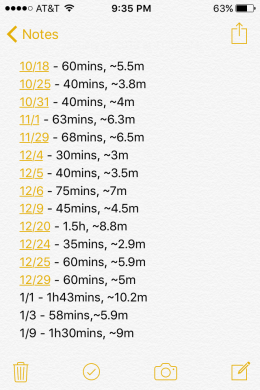
Training Log.PNG

My tracking log of the long run

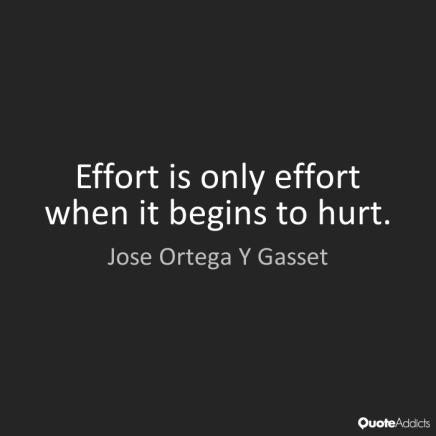
Getting comfortable with the longer distance is necessary, whereas reaching the time goal is the cherry on top. Aware of the ambitious goal of two hours, I needed to level up the speed. Although I tried to speed up in the last half mile of every long distance run, it was harder for me to control and maintain the speed when running alone on the trail. Thus, I had some shorter interval runs on the treadmill at a higher speed with slope added. The added slope simulates hill running, which could strengthen the heart and legs. What’s more, I also participated in the long runs organized by the local running club so the overall faster pace will help me. I remember the first time I showed up for the run, the organizer said “the slower group will run at a pace of 9 minute per mile”! I immediately felt hopeless, since it was at least 30 seconds faster than my faster pace. I eventually fell off the pack, but the practice did help. “Effort is only effort when it begins to hurt.” perfectly summed up the approach I tried to increase speed

Effort

This has become my favorite quote lately.

I am thinking about a destination half marathon in spring 2017 and my goal is to finish it under two hours. To avoid solely using the willpower to keep on going after mile 11 that happened in the first race, I will definitely go above the 13.1 mile mark in the next training. Of course, I will never forget cross-training and pushing myself harder on speed.

Email from a Mentee – What Makes a Productive Summer

After my job search story published on How I Got My Job in the US (also available on the blog), I saw heavy traffic on my blog and received quite a few subscribers. Thus, I felt motivated to write more often for my fellow readers! A couple of weeks ago I received an email from my mentee who is finishing up her sophomore year:

Letter from Mentee

Her email got me reflecting on how I spent my summer and decide to dedicate this post to sharing what I think can make a productive summer.

First of all, whether you are in the States or home for the summer, having some work experience will definitely give you an edge. Gaining relevant experience in a professional setting will make recruiters feel comfortable that you are capable of being responsible for deliverables and working with others. Thus, you will not only increase your chance of being invited for first round interview, but also have plenty of examples to talk about for behavioral questions.

As an international student, my disadvantage in the first two years of college was that I did not have any work experience in the US office setting. My mentor suggested that recruiters might not be as familiar with internship opportunities in China and find it challenging seeing the skills transferred to the US. They might think you are fine working in your home country but still wonder if you can manage working in the US speaking a different language and practicing different office etiquette. Depending on the office culture, working in the China office of a global company could be an exception. To alleviate the potential concerns, I decided to find an opportunity in the US for my sophomore year summer.

Unfortunately, My plan to find an on-campus job failed with no words from the hiring offices. The career advisor in my business school recommended checking out the internship postings of Minnesota Council of Non-Profit. Even though most positions posted were unpaid, I decided to give it a try. The great thing was that I received responses from recruiters after multiple online applications, different from my on-campus job application experience. I eventually interned in the finance department of MS Society in Minneapolis for 15 hours a week.

My main project responsibilities were to do an inventory count of all the office furniture – put a label on each piece and record them accordingly. The project was not quite challenging, but I remember hearing that “you need to do the simple tasks incredibly well to gain trust”. So I did. Once I finished up the project ahead of time, I volunteered to make some process improvement involving the general ledger (take initiatives) and worked with employees and volunteers to manage additional workload during the fundraising period (work in a team setting). Most importantly, I learned to adapt and manage expectations with my supervisor. Before the internship, I was used to the Chinese value that you must do whatever the manager tells you. There is no room of negotiation. Thus, I found it intimidating to talk to my manager about changing the schedule to accommodate my summer travel plan and the lower work demand in the office. Funny how tiny that issue is to me now. At the time, I scheduled an appointment with the career advisor to discuss how to have the conversation step by step. Here is a plug for the career center – take advantage of the available resources! The advisors are incredibly helpful!

Apart from my own stories, after college graduation, I also met a couple of current international students who were able to leverage part-time job or non-profit internship. One student completed an accounting internship at the Minnesota State department in 2015 summer – no sponsorship is required to work in the state department. She just started her summer internship with E&Y assurance in Minneapolis. The other student completed an internal audit internship with YMCA and went on to intern in the internal audit department of Select Comfort.

My own experience and their stories remind me of the importance of starting small. As a young professional, there are areas outside finance that I want to try and I have been figuring out how to acquire the skills and knowledge. I wish I had reached out to the local non-profits sooner to volunteer and learn. Similar to Minnesota Council of Non-Profit, Volunteer Houston is a wonderful website!

Apart from gaining professional experience, I highly recommend brushing up your technical skills. If you work in Finance or Accounting, mastering Excel is a must. The knowledge will not only save you time down the road, but also impress your future employer. I definitely see the difference when I started managing the summer interns in the office. It makes my job easier when the interns know how to use vlookup, match, index, pivot table, etc. Fortunately, my business school offered Excel classes over the summer for free, so I took all three classes (intro, intermediate, and advanced) in my sophomore year. What’s more, Google is a great resource to find explanations of how a function works. I rely on Google heavily when I am stuck in Excel.

Networking and reconnecting with your contacts is also a great investment of time. Now that you do not need to worry about class schedule conflict, you could arrange to meet up with your contacts in their offices or even travel out of town to their cities for in-person meetings. I have discussed conducting effective networking meetings, developing sustainable relationships, and finding jobs outside your current city in my prior posts.

Save the best for the last – use the break as what it is intended to – rest and recharge! If you could afford to travel, go to other cities! If you have fun books you are putting off reading, now it is time! If there are local restaurants, shops or museums you would like to explore, grab a couple of friends and go! If you are considering picking up a new skill, you have the perfect window to do so! Regardless, do not just spend your free time on the Internet or on TV! 😀

Starting small, brushing up the technical skills and networking skills, and doing some much needed R&R are what I think make a great summer. Enjoy it while you can, because you do not get these long breaks anymore after college!


Have a question for me? Feel free to email me at sijieand500words@gmail.com. Maybe your question is what everyone else is wondering. I look forward to hearing from you!